

These are in no particular order but there is one constant when dealing with people. There are those who are really good at what they do, and the rest range from mediocre down to piss poor.
It’s just about how good they are about concealing it.
The TRUST Myth
 We’re told we can trust our leaders. Their words affect our daily lives and when repeated by our media, have profound effects on everything from grocery and gas prices to world peace.
However, there’s a very small number of people in the United States who can lie with near total impugnity. None of us can lie about our boss or to our customers without being promply fired. But if you’re one of the 635 on Capitol Hill (clearly not the best and brightest 635 in America either….), and as long as you’re on the clock, you can say anything you want about anything or anybody.
Must be nice….
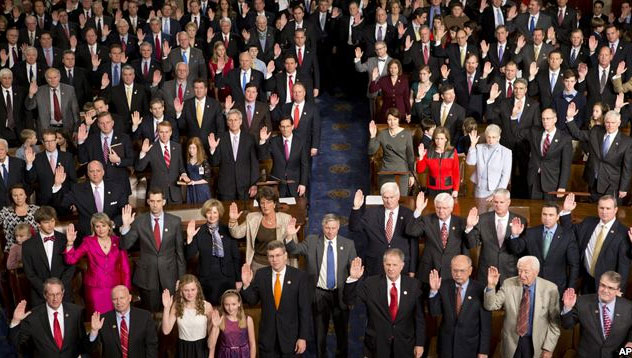 The Senators and Representatives shall in all Cases, except Treason, Felony and Breach of the Peace, be privileged from Arrest during their Attendance at the Session of their respective Houses, and in going to and returning from the same; and for any Speech or Debate in either House, they shall not be questioned in any other Place.
— United States Constitution (Article I, Section 6, Clause 1)
And they’d NEVER abuse that privilege, right?
 “If you like your doctor, you can keep you doctor. If you like your plan, you can keep your plan.”
— President Barack Obama, PolitiFact ‘Lie of the Year’
Obama knew Republicans would be hard pressed and/or gutless trying to prove “high crimes and misdemeanors” here as presidents were not included in the Clause, so he just repeated this whopper over three dozen times.
We had politicians on the floor of the Senate accusing a presidential candidate of not filing income taxes (knowing he did), and after the election one was called on the mistruth to which he responded, “Well, he didn’t win, did he?”
Americans have to live with the daily ramifications of falsehoods spoken and written by House and Senate politicians, echoed by both legacy and social media. Imagine how much better life could be if the elected were required to be honest….
The Only MEN ARE SLOBS Myth
 There are probably hundreds of instances where women declare men slobs, pigs, etc. Husbands and boyfriends are the butt of such declarations on women’s talk shows, op-ed and social media posts, and are never called on it.
That’s because women know and consciously deflect from an ugly truth: they can be easily outed as mockable projection hypocrites if their behavioral tendencies were exposed and publicly acknowledged.
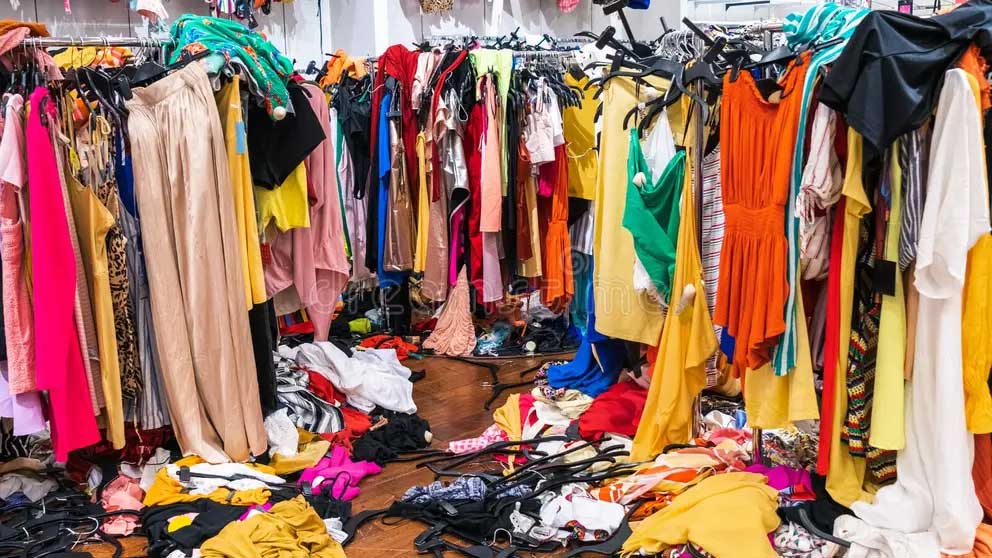 Go to any department store and look at the women’s clothing and shoe aisles. One will see blouses and dresses strewn on the floor under the hung garments. Women just throw garments anywhere but back on the racks where they found them. Shoes, instead on being put back in place after being tried on, are just left on the floor to be walked around or tripped over.
 Laura has also decribed the horrors of using a women’s public restroom.
Shit, piss and menstraul fluid literally splattered on and around toilet seats, soiled femine hygene products left on the floors or stopping up toilets… yeah, it’s fuckng gross and the same women who punchline men as slobs will NEVER tell you how disgusting they are behind closed stalls.
The Myth About ACADEMICS
 There is this perception that teachers and professors have the last word during any discussion. If one has any doubt, their academic credentials are thrown back in your face in an attempt to shut down any disagreement one may have with their conclusions. But why must we take their conclusion as the final word?
Because we’ve been trained to accept their word.
Teachers have the ultimate power, by issuing grades from first grade through college, to certify or destroy an academic record that has profound implications for an employment career. Since their grades are as simple as right or wrong, the implication is they know more than the student which most of the time is correct.
 However in recent years, teachers (who are never given the opportunity to be vetted by parents) enter the classroom, not with the mission to educate children with the tools needed to function in society but with personal agendas that may be at odds with the values with parents. But because they are teachers with the power to destroy the academic record of any child, those agendas have been legitimized.
Parents are given no proof of the proficiency of any teacher but are supposed to accept they are good teachers simply because they’re employed by a school. We have no prior assurance teachers are actual decent people. But again because they are teachers, parents are not allowed to question their competence and sanity even when they repeatedly behave in deviant manners.
The LAWYER Myth
Given the lofty compensation for their emergency services (they’re mostly only hired when bad things happen), one would think lawyers are the ultimate professionals. Cinematic and television portrayals collectively sure give that impression.
And where’s the proof?
 When looking for a lawyer, you’re presented with a headshot (usually taken when he or she was much younger). You’re to be impressed by the law school attended, their degrees, their years since passing the bar exam, and years in a legal area of expertice. But there’s one piece of very important information you won’t see in a lawyer’s bio.
When a professional sports team is looking for a new coach, the first metric their fans look at are the wins and losses. That’s the easiest way to gauge if that coach candidate is worth consideration. However with lawyers, you will NEVER see the wins and losses of any law firm or individual attorney on any website.
 So how do you know if the hundreds of dollars per hour, or contingency, is going to a good lawyer or a bad one?
You won’t.
Ask an attorney for the number of their wins and losses and see what happens. Note the grammar in their response for a quick clue.
The DOCTOR Myth
Again because of their level and years of education, we’re told it’s extremely problematic to ever question the conclusion of a medical professional. But doctors and lawyers share one commonality in said professions.
They don’t perform law or medicine. They “practice”.
That long-standing word description alone should be pause for concern as the common definition is it’s a “method of learning by repetition”. Do you really want someone learning when your finances, freedom, health or life is on the line? Like lawyers, you’re to assume high-priced doctors are good at what they do despite your not given any documentation to back it up.
 How many patients have they cured? How many have sued them for a misdiagnosis or negligence? How many patients have they lost?
Despite the high compensation demanded for their services, neither offer a guarantee of success.
If you don’t ask, they won’t tell you. If they do respond, they’ll probably hide behind HIPPA so they still won’t tell you.
The HEALTHY FOOD Myth
Just read the ingredients on any food product you purchase at your market of choice and you’ll be left dumbfounded because, chances are, you can’t even pronounce some of the chemicals added to what we consume on a daily basis.
 It might surprise you to learn that many food additives found in bread, baked goods, and candy manufactured in the United States are banned or restricted in Europe and other parts of the world because of potential health risks. U.S. consumers generally assume that items on grocery store shelves have been vetted for safety, but a loophole in the approval process of the U.S. Food and Drug Administration (FDA) means that 99 percent of new food chemicals aren’t evaluated before they are added to products.
— Everyday Heath
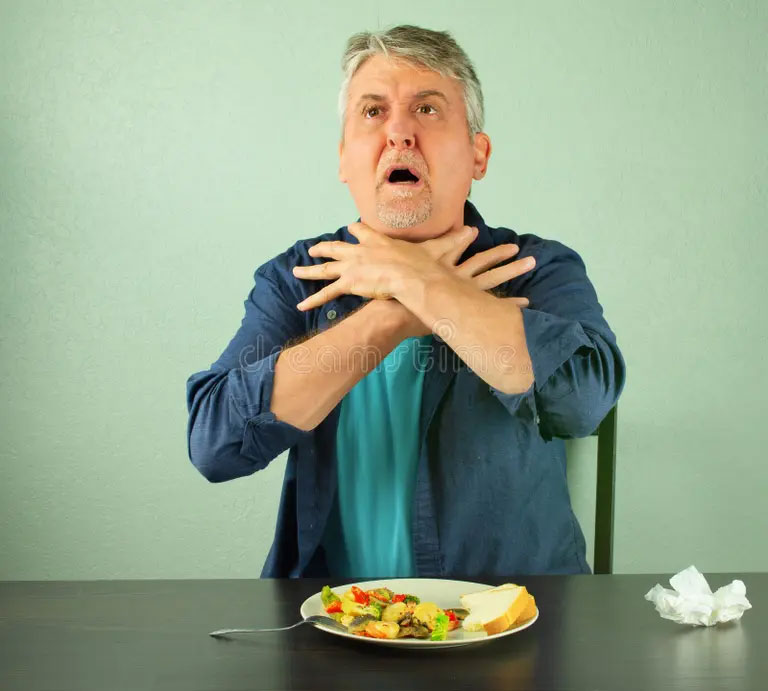 While the excuse may be these chemicals are added for visual and palate aesthetics or preservation, many of these additives have quite negative short and longterm health ramifications. High fructose corn syrup, maltodextrin, monosodium glutamate are some of the most widely used culprits. Funny how when you see drug commercials that reveal those pesky, possible negative side effects (that inconveniently include death), we’re never given similar warnings when it comes to the ingredients added to our food.
Are they trying to kill us?
The HOUSING SHORTAGE Myth
For anyone listening to news reports about the affordability and/or availability of homes, disregard all the metrics given as there’s one very important factor the media leaves out.
 Realtors.
They set local and regional market prices based on their personal commission demands. They are the ones assuring hallucinating sellers how valuable their neglected or damaged homes are. There are more protections for buying a used car than a home purchase worth hundreds of thousands of dollars.
Why are the homes neglected or damaged? Because some people bought over-their-head and after mortgage, bills, and daily expenses, had little money left, let alone for routine maintenance. When the inevitable happens and repairs are required, handyman cheap appears to be the remedy of choice and shoddy workmanship will be discovered belatedly by subsequent owners.
If you have the misfortune of searching for a home, there’s one constant: the condition of the homes you’ll see range from tolerable to you-must-be-high. From experience it’s safe to say 98% of the homes you’ll tour are in some way damaged. To a seller and realtor, the buyer is a mark. They want your money and conscience is in very short supply.
 Unless you have the wealth to build from ground up you’ll be choosing from poorly maintained, insect and/or rodent infested, mold and/or water damaged homes with inflated prices that will help an entitled seller hit the lottery and the greedy realtor receive that generous commission. If that house was initially listed at an realistic price with honest verbal and pictorial descriptions (big IF), it’ll most likely be scooped up quickly by another realtor/broker who’ll put the minimum into that house and flip it at a hefty markup. It’s the optional ethics of realtors that make home prices unaffordable for most buyers, not to mention the ripple effect of jacking up the property taxes of all those around that home.
Also be wary of the typical descriptions of houses found online: “meticulously maintained”, “nestled in”, “cozy”, “spacious” and other glowing adjectives that will be fodder for instant disappointment when you visit the property. Getting honest disclosures from realtors (required by law in some states) about the house is like pulling teeth. You’ll only be told what you know to ask. Then it’s a question of how much potential money you’re willing to tolerate or invest in that house after buying that expensive shack.
Despite all you’re told, there is no housing shortage.
There IS a shortage of houses that are worth the asking price.
The QUALITY Myth
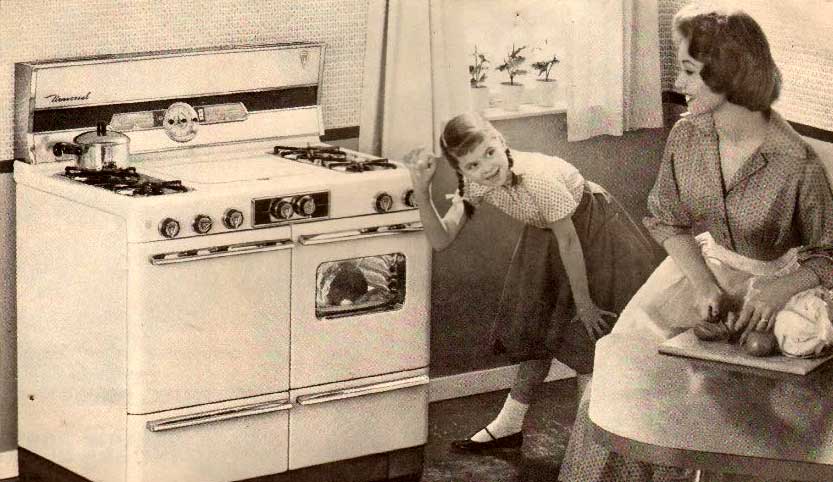 Speaking of overpriced, there was a time in America if you were to spend a little more money on an item , you were assured of receiving something of higher quality that would last for many, many years.
Those were the days.
Cars actually had steel frames and bodies that could withstand a simple bump and could inflict even more damage to whatever it came in contact with. The left saw that as unfair, so all cars were subsequently constructed with lighter materials so damage would be more equitable.
 Just look at some of the 60’s era kitchen appliances you can still find in homes currently for sale.
Today, the more you spend on anything, you’ll purchase the inferior in order to get you to repeat that sad cycle. Any product or service you don’t buy often will be used against you. The quality will be questionable at best to assure multiple repeat visits that will never fix the problem. Whether we’re talking about an appliance, store, auto mechanic, finding someone who’s first mission isn’t to rip you off is like seeking the Holy Grail.
As this appears to be the current business model, not sure when our money will be respected again.
The MEDIA Myth
 We’re told to trust the media, and who says that the most?
The media.
Without those who consume their product, their overinflated salaries don’t happen. News anchors must come off as authorities on any given topic and when the inevitable happens and they get something very wrong, apologies and retractions are as brief and short as possible. To make matters worse, whether we’re talking about the news or entertainment industries, these people truly believe they are smarter that the American people whose ignorance on any given topic should be solely blamed on… the media.
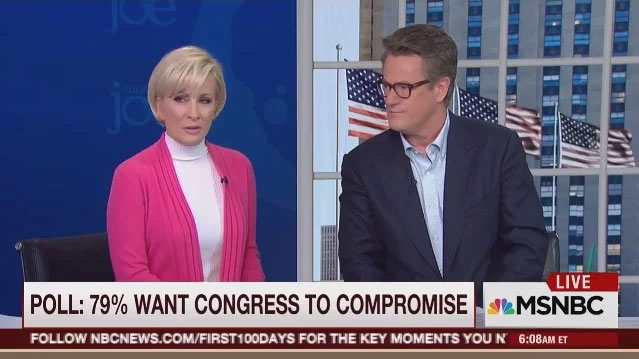 Our job is to control what people think.
— Mika Brzezinski, 2/22/17
Note the use of terms used when describing the American people: “average”, “everyday”, “ordinary” people. Think of the narcissistic arrogance and sense of privilege it takes to constantly look at others in that fashion. It gives too many the license to misinform and/or manipulate because they believe they know what’s best for the public, and for those they prefer and deem protectable.
Many of today’s journalists also believe if it’s something they’ve never heard of, it never happened. What could go wrong with that thinking?
Also be wary whenever a journalist cites an “expert” to justify a conclusion. More times than not like “anonymous sources”, those experts are not named and if so, the number is as few as possible. That “source” can also be an academic (see: above), or based on past incidents, can be made up altogether.
Arrogance crosses into the entertainment industry where television and movie celebrities believe they’re deep thinkers and know it all simply because of where they work, not to mention those who work for them who don’t have the guts to risk their employment and tell these entertainers when they’re wrong. As a result, embarrassingly misinformed musings are distributed to the masses.
 It has been brought to my attention that, in my support of Palestine, I have inadvertently re-posted articles, and/or statements, that have contained misinformation and falsehoods. I am aware how sharing inaccurate content can cause confusion and distress; for this I am deeply sorry. I will certainly endeavour to be more diligent in future to verify anything I share online.
— Guy Pearce, actor
“Inadvertently”….
For the most part, disregard their opinions unless you put them in the parody column.
When it comes to the world of broadcast sports, on-air pundits could be the worse as too many believe they’re also comedians instead of analysts. Their jokes and segments aren’t funny, and we’re to embrace their condescending belief that eye candy is necessary to keep men interested.


Stop.
There are other examples of myths that will inevitably come to mind as life continues.
Leave a Reply